
Sign in to access your account information.
Sign InTrack and check the status of an order.
Order Lookup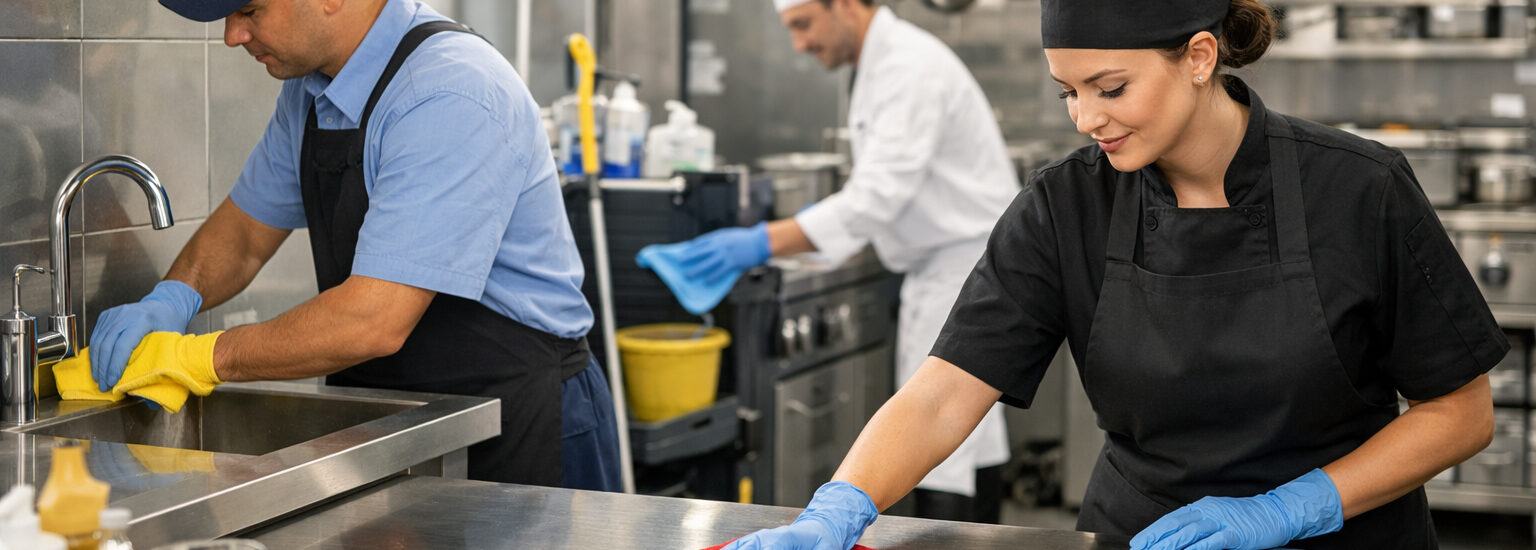
In janitorial and food service environments, cleaning tools directly impact hygiene outcomes, labor efficiency, and regulatory confidence. As facilities face tighter sanitation expectations and ongoing labor constraints, microfiber towels have become a practical standard for modern cleaning programs.
This article explains why microfiber towels are now essential in Jan/San and food service operations—and how facilities can use them to improve cleaning performance, consistency, and cost control.
Across commercial cleaning and food service, the industry is shifting toward tool-based efficiency rather than chemical-heavy approaches. Microfiber towels support this shift by delivering better soil capture with less effort.
Unlike traditional cotton rags, microfiber towels are engineered with split fibers that trap dust, grease, and microorganisms more effectively. This allows facilities to achieve better results using less water and fewer chemicals—an important advantage as sustainability and worker safety remain top priorities.
Organizations such as ISSA and NIOSH have highlighted microfiber’s ability to reduce cross-contamination when used within structured cleaning programs. Always verify practices against current OSHA and food safety guidance.
For food service kitchens, cafeterias, and janitorial teams, ineffective wiping tools can introduce risk rather than reduce it. Poor absorption, lint shedding, or inconsistent cleaning increases the likelihood of surface contamination.
Microfiber towels create an opportunity to:
Improve surface sanitation with fewer passes
Reduce chemical reliance on food-contact and prep areas
Standardize cleaning results across shifts and teams
When color-coded, microfiber towels also support zoning practices that help limit cross-contamination between restrooms, kitchens, and common areas.
Facilities should evaluate whether their current wiping cloths align with today’s hygiene expectations. Key considerations include durability, absorbency, washability, and compatibility with disinfectants commonly used in food service and janitorial applications.
Managers should also ensure microfiber towels are paired with:
Clear laundering protocols
Color-coding systems
Documented cleaning procedures
Check current OSHA and local health department guidance for sanitation compliance requirements.
Raxwell Industries supports Jan/San and food service operations with commercial-grade microfiber towels designed for durability and consistent performance. These towels are well-suited for high-use environments where reliability matters.
Available through Raxwell’s Janitorial & Cleaning category, microfiber towels help facilities:
Capture fine dust, grease, and residue efficiently
Reduce waste from disposable wiping products
Maintain consistent cleaning outcomes across teams
Explore Raxwell’s microfiber solutions 👉 here:
Related facility support solutions:
Jan/San Supplies: Link
Material Handling (waste management, storage): Link
Raxwell focuses on consistent quality and dependable supply, helping facilities avoid disruptions in daily cleaning operations.
Audit current wiping cloth performance and replacement frequency
Introduce microfiber towels in high-touch and food prep areas
Implement color-coded towel systems to reduce cross-contamination
Train staff on proper towel folding and usage techniques
Establish laundering standards to preserve microfiber effectiveness
Q1: Are microfiber towels safe for food service environments?
Yes, when used correctly and laundered properly. Always follow local health code requirements.
Q2: Do microfiber towels reduce chemical use?
In many cases, yes. Their fiber structure allows effective cleaning with less solution.
Q3: How long do microfiber towels last?
Commercial-grade microfiber can withstand hundreds of wash cycles if maintained correctly.
Q4: Can microfiber towels help with cross-contamination control?
Yes, especially when paired with color-coding and zone-based cleaning protocols.
Q5: Do microfiber towels replace disposable wipes?
They often reduce dependence on disposables, improving cost control and sustainability.
Microfiber towels are no longer a premium upgrade—they are a practical necessity for janitorial and food service operations focused on efficiency, hygiene, and consistency. When integrated into structured cleaning programs, they help facilities meet modern sanitation expectations without adding complexity.
Raxwell Industries delivers dependable microfiber solutions designed to support daily cleaning demands—so teams can focus on performance, not replacements.
“Effective sanitation starts with the right tools—and microfiber has become the standard for facilities that value consistency and control.”
— Raxwell Industries
#JanSan #FoodServiceSafety #FacilityManagers #CommercialCleaning #SanitationStandards #OperationalEfficiency
READY TO MOVE FASTER?
High-turn systems structured to help serious distributors win more volume.

Raxwell Industries is a leading global supplier of quality industrial products and services.
Copyright ©2018-2026 Raxwell Industries | Privacy Policy | Terms & Conditions | Refund Policy